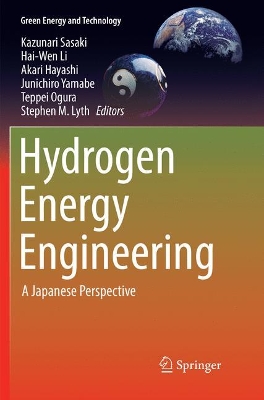
Hydrogen Energy Engineering
 -15%
portes grátis
-15%
portes grátis
Hydrogen Energy Engineering
A Japanese Perspective
Li, Hai-Wen; Yamabe, Junichiro; Lyth, Stephen M.; Hayashi, Akari; Sasaki, Kazunari; Ogura, Teppei
Springer Verlag, Japan
06/2018
593
Mole
Inglês
9784431567622
15 a 20 dias
920
Descrição não disponível.
Why Hydrogen? Why Fuel Cells?.- Current Status: General.- Current Status: Global.- Development Histories: Hydrogen Technologies.- Development Histories: Fuel Cell Technologies.- Future Technological Directions.- Introduction.- Reforming.- Alkaline Water Electrolysis.- Polymer Electrolyte Membrane Water Electrolysis.- Steam Electrolysis.- Photocatalytic Water Splitting.- Fundamentals.- Solid Hydrogen Storage Materials: Interstitial Hydrides.- Solid Hydrogen Storage Materials: Non-Interstitial Hydrides.- Solid Hydrogen Storage Materials: High Surface Area Adsorbents.- Liquid Hydrogen Carriers.- Compressed Hydrogen: Thermophysical Properties.- Compressed Hydrogen: High Pressure Hydrogen Tanks.- Hydrogen Storage: Conclusions and Future Perspectives.- Fundamentals.- Polymer Electrolyte Fuel Cells (PEFCs).- Solid Oxide Fuel Cells (SOFCs).- Alkaline Electrolyte Fuel Cell (AFCs).- Hydrogen Combustion Systems.- Hydrogen Safety Fundamentals.- Hydrogen Gas Safety Management.- Hydrogen Safetyin Practice.- Hydrogen and the Tensile Properties of Metals.- Hydrogen and the Fatigue Properties of Metals.- Hydrogen and the Fretting Fatigue Properties of Metals.- Structural Design and Testing.- Future Perspectives.- Development of the MIRAI Fuel Cell Vehicle.- Residential Applications: ENE-FARM.- Distributed Power Generation.- Triple Combined Cycle Power Generation.- Fuel Cells with Biofuels.- Portable Applications.- Hydrogen Infrastructure.- Business Model Evaluation of Hydrogen Energy.- Public Acceptance.- Numerical Analysis of the Optimal Distribution of Hydrogen Filling Stations.- Hydrogen Energy Education.
Este título pertence ao(s) assunto(s) indicados(s). Para ver outros títulos clique no assunto desejado.
Biomass Fermentation;Fuel Cells;Hydride;Hydrogen Energy;Hydrogen Production;Hydrogen Safety;Hydrogen Storage
Why Hydrogen? Why Fuel Cells?.- Current Status: General.- Current Status: Global.- Development Histories: Hydrogen Technologies.- Development Histories: Fuel Cell Technologies.- Future Technological Directions.- Introduction.- Reforming.- Alkaline Water Electrolysis.- Polymer Electrolyte Membrane Water Electrolysis.- Steam Electrolysis.- Photocatalytic Water Splitting.- Fundamentals.- Solid Hydrogen Storage Materials: Interstitial Hydrides.- Solid Hydrogen Storage Materials: Non-Interstitial Hydrides.- Solid Hydrogen Storage Materials: High Surface Area Adsorbents.- Liquid Hydrogen Carriers.- Compressed Hydrogen: Thermophysical Properties.- Compressed Hydrogen: High Pressure Hydrogen Tanks.- Hydrogen Storage: Conclusions and Future Perspectives.- Fundamentals.- Polymer Electrolyte Fuel Cells (PEFCs).- Solid Oxide Fuel Cells (SOFCs).- Alkaline Electrolyte Fuel Cell (AFCs).- Hydrogen Combustion Systems.- Hydrogen Safety Fundamentals.- Hydrogen Gas Safety Management.- Hydrogen Safetyin Practice.- Hydrogen and the Tensile Properties of Metals.- Hydrogen and the Fatigue Properties of Metals.- Hydrogen and the Fretting Fatigue Properties of Metals.- Structural Design and Testing.- Future Perspectives.- Development of the MIRAI Fuel Cell Vehicle.- Residential Applications: ENE-FARM.- Distributed Power Generation.- Triple Combined Cycle Power Generation.- Fuel Cells with Biofuels.- Portable Applications.- Hydrogen Infrastructure.- Business Model Evaluation of Hydrogen Energy.- Public Acceptance.- Numerical Analysis of the Optimal Distribution of Hydrogen Filling Stations.- Hydrogen Energy Education.
Este título pertence ao(s) assunto(s) indicados(s). Para ver outros títulos clique no assunto desejado.